
A Brief History of Improvisational Theatre: A Timeline
Introduction to the History of Improvisational Theatre
“We stand on the shoulders of giants”
– Sir Isaac Newton
Modern improvisational theatre owes its existence to centuries of experimentation, creativity, and passion. From the comedic brilliance of Ancient Greece’s Dionysian festivals to the intricate gestures of India’s Natya Shastra, to the structured innovations of Viola Spolin and Keith Johnstone, each era has added layers to this dynamic discipline.
Today’s modern improvisational theatre continues to build on these foundations, celebrating an art form that thrives on spontaneity, collaboration, connection, and play.
This timeline pays homage to the extraordinary efforts that have made modern improvisation possible.
Let’s begin as far back as history remembers…
***Note this is not fully completed yet! We are vetting this article and adding more information as it surfaces! Apologies if it’s missing something, it’s as complete as we could make it with the time allotted, in time it will become an all inclusive list! If you feel something is missing, please reach out at blackboxacad@gmail.com
Overview | Worldwide History of Improvisational Theatre
- Ancient and Traditional Roots (Pre-500 CE)
- The Middle Ages and Renaissance (500–1600 CE)
- 19th-Century Developments (1800–1900)
- Mid-20th Century (1920s–1960s)
- 1970s: The Loose Moose Theatre and Theatresports
- 1980s: The Rise of Improv Worldwide
- 1990s: Improv as Mainstream Entertainment
- British and Other Panel Shows
- 2000s: Improv Globalization and Cultural Hybridization
- 2010s–Present: Improv as a Worldwide Movement
- Bonus: Notable Teachers List

Ancient and Traditional Roots (Pre-500 CE) | The Origins of Improvisational Theatre
- (600-501 BCE) Ancient Greece: Improvisation was featured prominently in comedic and satirical performances during Dionysian festivals, where actors adapted their performances to the audience’s reactions in real time. (Wikipedia).
- (200 BCE–200 CE) India: The Natya Shastra an ancient Indian treatise on dramatic arts, written by Bharata Muni around 500 BC. It is a comprehensive handbook covering various aspects of classical Sanskrit theatre, including dance, music, poetics, and aesthetics. Including improvisational gestures, music, and movements to express emotions from Sanskrit Theatre. This laid the foundation for highly stylized and impromptu performances in Indian classical theatre
- Africa (Griots(/ˈɡriːoʊ/; French:): Griots were the oral historians of West Africa, using song, improvisation, and storytelling to preserve historical narratives, influencing improvisation in storytelling and music . There are still Griots preserving traditions to this day.
- Asia (Kyōgen & Chinese Opera): In Japan, Kyōgen (狂言, “mad words” or “wild speech”) is a form of traditional Japanese comic theatre.) —comedic interludes during Noh theatre—relied heavily on improvisational humor to engage audiences. Similarly, in China, traditional opera included spontaneous dialogue and musical improvisation.
The Middle Ages and Renaissance (500–1600 CE) | Evolution of Improv Comedy Across Cultures

(Commedia dell’Arte Troupe on a Wagon in a Town Square by Jan Miel (1640))
- Mystery Plays and Morality Plays: Medieval plays based on Biblical stories often included improvisation to cater to the audience’s local needs and create a more interactive experience.
- Commedia dell’Arte (Italy, 16th Century): This Italian Renaissance art form featured improvisational performances around a basic script, or canovaccio, and created archetypal characters such as Harlequin and Columbina. Commedia dell’Arte’s blend of structure and spontaneity influenced modern improv theatre.

Early 20th Century (1900s–1940s)
- (mid-1800s) Vaudeville: A vaudeville was originally a comedy without psychological or moral intentions, based on a comical situation: a dramatic composition or light poetry, interspersed with songs or ballets. Improvisation was frequently used in vaudeville performances to tailor acts to different audiences.
- Musical Improvisation: Jazz music, born in the late 19th century with pioneers like Louis Armstrong and Jelly Roll Morton, revolutionized musical performance by making improvisation a central feature, influencing theatre and performance arts at large.
Mid-20th Century (1920s–1960s) | Improv Pioneers and Influencers

- Viola Spolin: In the U.S., Viola Spolin developed “theatre games” in the 1930s, teaching improvisational techniques to help children develop social skills. Her son, Paul Sills, co-founded the Compass Players (1955), which became The Second City in 1959. This laid the groundwork for modern improvisational comedy in the U.S. (Wikipedia).
- Paul Sills: A pivotal figure in modern improvisational theatre, Sills began his career in the 1950s, deeply influenced by his mother, Viola Spolin, whose work on theatre games shaped his artistic philosophy. Sills co-founded the Playwrights Theatre Club in Chicago in 1953, fostering experimental theatre productions. Later, he helped establish The Compass Players in 1955, often regarded as the first modern improv theatre group. These early ventures laid the groundwork for his most significant achievement in 1959: founding The Second City, which became a powerhouse of improv comedy, training legendary comedians and reshaping comedic performance globally
- Keith Johnstone: Post-World War II, improvisational theatre gained momentum in Europe, especially through the work of Keith Johnstone, who began his career at the Royal Court Theatre in London in 1956. It was during this time that Johnstone began developing his radical approaches to improvisation and creativity, influenced by his dissatisfaction with traditional teaching methods in theatre and the rigid structures of performances at the time.
Fascinatingly these initial pioneers first began using improv as a response to children who had challenges learning. The amazing part is they began developing similar concepts on different continents. You can find out more in Keith’s book (amazon), and Viola’s book (amazon) if you’re interested. Or check their websites linked below

(Viola Spolin – https://www.violaspolin.org/bio)
(Keith Johnstone – https://www.keithjohnstone.com/)
1970s: The Loose Moose Theatre and Theatresports

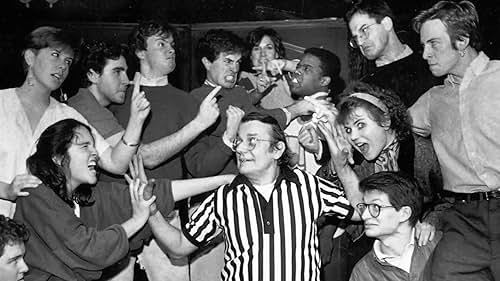
- Keith Johnstone and The Loose Moose Theatre Company (Canada): In the 1970s, Keith Johnstone moved to Calgary, Canada, where he co-founded the Loose Moose Theatre Company. It was here that he developed Theatresports. Keith was inspired by the excitement he felt from the crowd at a wrestling match. Longing for that sort of energy in the theatre, he wondered if audiences might respond similarly to a more competitive theatre environment. A competitive improv format that paired teams of improvisers to battle in performance was born. This concept began its spread across Canada and the world, becoming the cornerstone of modern improv. Theatresports was introduced to a wider audience in the U.S., Europe, and beyond by the 1980s, helping to popularize improv in mainstream performance culture. This has had massive influence on the cultural history of improv. (Wikipedia, Impro (amazon link)).
- The Second City’s Global Impact: The Second City expanded to Toronto (1973) and other cities, becaming the premier institution for training improvisers and fostering the next generation of comedic talent. The influence of Second City alumni, including Bill Murray, Tina Fey, and Stephen Colbert, has had a lasting impact on global comedy.
- The Groundlings (1974, Los Angeles, USA) is a prestigious Los Angeles improv and sketch comedy theater and school founded in 1974. Renowned for its rigorous training program, it has launched the careers of countless comedy legends, including Will Ferrell and Kristen Wiig. The theater hosts weekly performances blending satire, wit, and character-driven humor, making it a staple in the LA comedy scene. The Groundlings School is equally celebrated for its structured curriculum that develops performers’ comedic timing, improvisation skills, and character creation.
1980s: The Rise of Improv Worldwide

(ImprovOlympics in Chicago)
- (1980) Theatresports Expands Globally: By the 1980s, the success of Theatresports led to the establishment of improv theatres across North America, Europe, and Australia. The format became the backbone of improv comedy in cities like Chicago, Los Angeles, Toronto, and London. Whose Line Is It Anyway? began airing in the UK in 1988 and later in the U.S., exposing improv to a mainstream television audience and inspiring a new generation of improvisers.
- (1981) Del Close and ImprovOlympic: In the U.S., Del Close and Charna Halpern co-founded ImprovOlympic (iO) in 1981, creating an environment that would nurture long-form improv, developing the Harold structure. Close’s influence on modern improv, particularly his teachings on the “yes, and…” philosophy, continues to shape the field. Charna Halpern.
- (1983) The Canadian Improv Games (CIG) were founded In 1983, by Jonathan Harris in Ottawa. These regional and national competitions provided a structured, competitive outlet for young (high school) improv artists across Canada, and became a key part of the Canadian improv scene. The CIG continues to offer youth opportunities to develop their skills in improvisational theater today.
- (1987) Annoyance Theatre is a renowned Chicago-based improv and comedy institution known for its bold, unfiltered approach to performance. Established in 1987, it has carved out a niche with shows that embrace experimentation and irreverence, often pushing boundaries in content and form. The theatre is a creative haven for emerging and seasoned performers, offering classes and workshops that emphasize individuality and fearlessness in comedic expression.
1990s: Improv as Mainstream Entertainment


- Television’s Influence on Improv: The popularity of Whose Line Is It Anyway? (U.S. version 1998) and Saturday Night Live (SNL), along with the rise of improv comedy shows, solidified the connection between improv theatre and mainstream entertainment. Shows like The Kids in the Hall and Mad TV also helped introduce the art form to TV audiences.
- The 1990s saw improv not only as a performance art but as a core part of comedic writing and acting training across the U.S. and Canada.
- International Influence: Johnstone’s Theatresports continued to expand worldwide, with numerous countries adopting the format. Improv became more institutionalized with formal schools and classes dedicated to the craft in cities like New York, Toronto, London, and Melbourne
- (1993) International Festivals and Networks: As improv gained global traction, international festivals like the Chicago Improv Festival and the Montreal Improv Festival began to unite improv communities worldwide. This era also saw the establishment of networks like the International Theatresports Institute (founded in 1993), which helped spread the principles of competitive improv across the globe.
- (1999) Upright Citizens Brigade (UCB): Founded in 1999 in New York by Matt Besser, Amy Poehler, Ian Roberts, and Matt Walsh, UCB became known for its structured approach to short-form and long-form improv, blending comedy and character-driven improvisation. UCB has launched numerous careers in television and film, including those of Donald Glover and Aziz Ansari.
British and Other Panel Shows

- 1990s: QI and Other British Panel Shows: Panel shows like Have I Got News for You, Never Mind the Buzzcocks and later QI (Quite Interesting), which started in 2003 and continues today, also showcase improvisational elements. Although not fully dedicated to improv, QI and similar shows like 8 Out of 10 Cats and Mock the Week incorporate improvisation into their humor and structure. These shows help elevate British comedy by encouraging unscripted banter, quick wit, and improvised interactions among the panelists, often improvising answers to trivia questions. The success of QI influenced the rise of similar programs globally (BBC).
2000s: Globalization and Cultural Hybridization of Improvisational Theatre

- Improvisation in Asia: In Japan, Kyōgen and Rakugo began blending traditional storytelling forms with Western improv techniques, creating a unique hybrid performance style. Similarly, in China, improv began to gain traction as a new form of theatre. The growing influence of Western improv led to the formation of new improv companies in countries like India and Singapore, where improvisational techniques were incorporated into both entertainment and educational settings (House Improv Theater).
- Improvisation in Corporate and Educational Sectors: As improv’s popularity grew, many institutions began using it in corporate training, team-building exercises, and educational curricula, emphasizing creativity, collaboration, and adaptability.
2010s–Present: Improvisational Theatre as a Worldwide Movement | Modern-Day Improvisational Theatre

- Global Festivals and Collaborations: Festivals like the Singapore Improv Festival (above photo) and the Global Improvisation Initiative, founded in 2016, have become focal points for improv theatre practitioners worldwide. These festivals celebrate diverse traditions and new forms of improv while fostering international collaboration. Improv remains an essential part of the global theatre landscape, with improv schools and troupes continuing to emerge across the globe (Wikipedia).
- Media and Cultural Impact: The influence of improv has expanded to new media, with improvisational comedy influencing popular TV shows, movies, and online content. Performers trained in improv are often involved in film and television, helping create unscripted comedy and contributing to the improvisation of scenes in many mainstream productions.
- Social media has provided new avenues for improvisers to share their work with global audiences. The list is far too long to type here, but here are a few improv inspired channels to explore:
- Improv in the Digital Age: The rise of digital platforms like Zoom and Twitch has led to the growth of online improv performances and virtual jams. Platforms such as Twitch have enabled improvisers to broadcast live performances to a global audience, marking a shift in how improv is consumed and interacted with.
- New Improv Schools and Communities: New schools and communities continue to emerge, The Free Association, founded in London in 2013, has become a major player in the UK improv scene, with an emphasis on collaborative, experimental improvisation. In Melbourne, The Improv Conspiracy (founded in 2009) has become a key institution in Australia’s improv community. With the newest player (shameless plug) on the block Blackbox Academy, founded late 2024 in Saskatoon, SK!
- Therapeutic and Educational Uses: Improv has also found applications in therapy, education, and business. Therapeutic improv (using improv techniques in mental health settings) and corporate training programs that promote creativity and teamwork have helped expand improv’s role outside traditional performance spaces.
- New Innovations in Theatrical Improv
- Hyprov is a unique fusion of improv comedy and hypnosis, co-created by world-renowned hypnotist Asad Mecci and improv legend Colin Mochrie of Whose Line Is It Anyway?. The show combines live audience participation and expert comedic timing, resulting in unscripted, unpredictable, and hilarious performances. By hypnotizing audience volunteers and guiding them through improvised scenes, Hyprov delivers a one-of-a-kind experience blending spontaneity and humor.
- Hyprov is a unique fusion of improv comedy and hypnosis, co-created by world-renowned hypnotist Asad Mecci and improv legend Colin Mochrie of Whose Line Is It Anyway?. The show combines live audience participation and expert comedic timing, resulting in unscripted, unpredictable, and hilarious performances. By hypnotizing audience volunteers and guiding them through improvised scenes, Hyprov delivers a one-of-a-kind experience blending spontaneity and humor.
Further Innovations

International Improv Networks: The International Theatresports Institute (founded in 1993) and The Improv Network (an online collective of improvisers, formed in the 2010s) are examples of how improv has continued to grow globally. These networks host international festivals, provide resources, and foster collaboration across countries, making improv a truly global art form. Helping maintain global traditions in improvisational art.
Improv in Non-Traditional Settings: Over the past few decades, improv has become a tool for therapy (known as therapeutic improv), business training, and education. Many corporate and leadership training programs now integrate improv exercises to promote creativity, problem-solving, and teamwork. This has expanded improv’s utility beyond performance and into professional development, improving its global reach and acceptance in various sectors.


(Keith Johnstone, Del Close, Viola Spolin)
Notable Figures in the History of Improvisational Theatre
- Viola Spolin (US) (Taught: 1930s-1994, until her death in 1994)
Often referred to as the “mother of modern improv,” Viola Spolin developed improvisation-based theatre games in the 1930s, initially as a tool for teaching social skills to children. Her methods were later adapted and expanded by her son, Paul Sills, to form the foundation of Chicago’s The Second City.
Buy her book “Improvisation for the Theater” on Amazon - Del Close (US) (Taught: 1950s-1999, until his death in 1999)
One of the most influential figures in modern improv, Del Close co-founded IO and developed The Harold, which became a cornerstone of long-form improv. His teachings focused on the importance of “group mind” and emotional honesty in performance.
Get his book “Truth in Comedy” (amazon) - Keith Johnstone (UK & Canada) (Taught: 1950s-2020, passed away in 2020)
Keith Johnstone, the creator of Theatresports and a key figure in the development of modern improv, revolutionized the field with his focus on spontaneity and narrative creation. Begging his work in and the UKHis influence on improv groups like The Loose Moose Theatre and his global impact cannot be overstated.
Get his books on Amazon “Impro”,
“Impro: For Storytellers” - Paul Sills (US) (Taught: 1950s-2008, until his death in 2008)
A co-founder of The Second City, Paul Sills was instrumental in developing the Theatre Games method popularized by his mother, Viola Spolin. His work in Chicago helped solidify the connection between improv and sketch comedy. - Charna Halpern (US) (Taught: 1980s-Present)
Co-founder of IO Theater with Del Close, Charna Halpern helped to shape modern improvisational theatre through her teachings, particularly the Harold method, and she remains a key figure in the world of improv education.
Buy her book “Truth in comedy” on Amazon - Matt Besser (US) (Taught: 1990s-Present)
One of the co-founders of the Upright Citizens Brigade, Matt Besser is a key figure in modern improv. His influence in creating a more structured, comedic approach to improv has left a lasting impact on performers and teachers alike. - Amy Poehler (US) (Taught: 1990s-Present)
Co-founder of UCB, Amy Poehler’s work as both a performer and teacher helped transform the improv scene in New York and Los Angeles, and she remains a significant influence on improv comedy today.
Get her book on Amazon - Ian Roberts (US) (Taught: 1990s-Present)
Co-founder of UCB, Ian Roberts contributed to the development of UCB’s approach to improv training. His work on long-form improv continues to influence students and improv professionals worldwide.
Conclusion: The Ever-Evolving Art of Improvisational Theatre
The history of improvisational theatre is a rich tapestry of creativity, cultural exchange, and artistic innovation. From its roots in ancient rituals and traditions to its role in shaping modern performance art, improvisation has continually adapted and evolved. Whether through the Commedia dell’Arte’s comedic brilliance or the transformative methods of visionaries like Viola Spolin and Keith Johnstone, improvisational theatre has left an indelible mark on the world stage.
Today, it continues to thrive as a powerful tool for artistic expression, education, and even therapy, uniting people across cultures and disciplines. As we move into the future, improvisational theatre’s adaptability ensures it will remain a vital and relevant art form, inspiring generations to think creatively, connect meaningfully, and embrace spontaneity.
For anyone fascinated by the performing arts, exploring the history of improvisational theatre offers not just a glimpse into its past but also an invitation to be part of its ongoing story.
References and Further Reading
Key Texts on Improvisational Theatre
- Improvisation for the Theater by Viola Spolin
- A foundational book that introduces Spolin’s theatre games, which are widely used in improvisation training today.
- Impro: Improvisation and the Theatre by Keith Johnstone
- A seminal work exploring the philosophy and techniques of improvisation, including the creation of Theatresports.
- Truth in Comedy: The Manual of Improvisation by Charna Halpern, Del Close, and Kim “Howard” Johnson
- A guide to the principles of long-form improvisation as pioneered at Chicago’s The Second City and iO Theater.
Online Resources and Archives
- National Theatre’s Improvisation Resources
- Explore techniques and strategies from the UK’s National Theatre.
National Theatre Improvisation Resources
- Explore techniques and strategies from the UK’s National Theatre.
- Keith Johnstone’s Official Website
- A deep dive into Johnstone’s methods, workshops, and his contributions to Theatresports.
Keith Johnstone Official Website
- A deep dive into Johnstone’s methods, workshops, and his contributions to Theatresports.
- Viola Spolin’s Legacy
- Learn more about Spolin’s techniques and her enduring impact on the world of improvisation.
Viola Spolin Official Website
- Learn more about Spolin’s techniques and her enduring impact on the world of improvisation.
- The Second City Blog
- Articles, tips, and insights into the world of improvisation from The Second City’s creative team.
The Second City Blog
- Articles, tips, and insights into the world of improvisation from The Second City’s creative team.
- Improv Encyclopedia
- A comprehensive online collection of improv games, techniques, and history.
Improv Encyclopedia
- A comprehensive online collection of improv games, techniques, and history.
- Theatresports Institute
- Resources and history about Theatresports and its global adaptations.
Theatresports Institute
- Resources and history about Theatresports and its global adaptations.
Looking for creative things to do in Saskatoon? Check out our adult, and kids improv & acting classes today!
Learn more Blackbox Academy
Written by:

Edited by:

Leave a Reply